Two plant extract quotations can look alike and describe very different materials. One says "10:1", another says "95%", a third gives a percentage with no test method. This guide explains what those numbers mean and what to check before you compare prices.
Ratio extracts: what "10:1" means
A ratio extract is described by how much raw plant went into the finished powder. A 10:1 extract means roughly 10 kg of dried plant was used to make 1 kg of extract.
The ratio tells you about the process, not the content. It does not say how much of any particular compound is in the powder, and two 10:1 extracts can differ a great deal depending on the solvent used and how much carrier was added afterwards. Ratio extracts are common where there is no single accepted marker compound for the plant.
Standardized extracts: what "95%" means
A standardized extract is adjusted to contain a stated amount of a marker compound, measured by a stated method. For example:
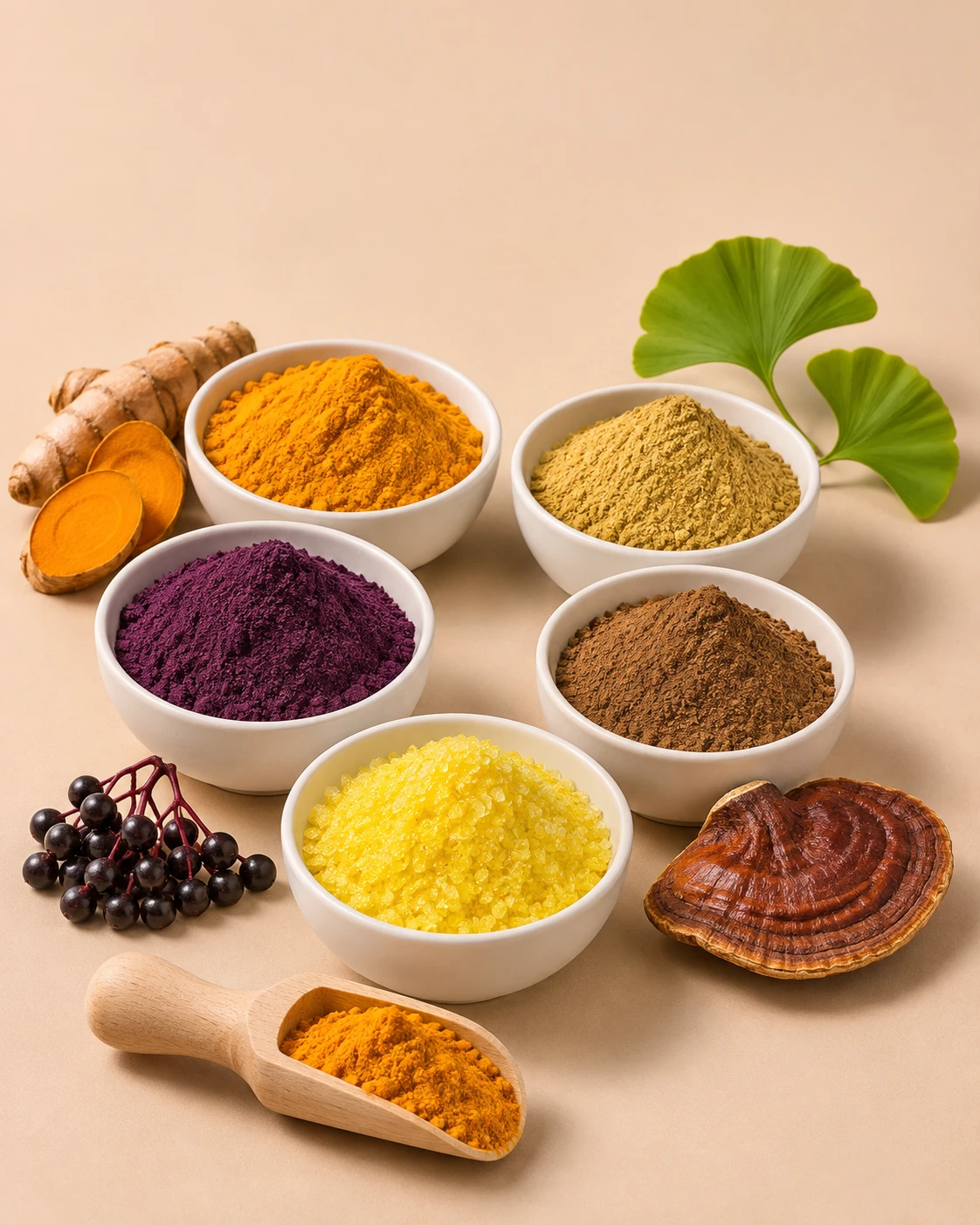
- Turmeric extract: curcuminoids, with 95% as the common grade, by HPLC
- Ginkgo biloba extract: 24% flavone glycosides and 6% terpene lactones, by HPLC
- Boswellia extract: boswellic acids, 45% or 65%
- Elderberry and blueberry extract: anthocyanins
A percentage is only meaningful together with its marker and its test method. "Elderberry extract 25%" is incomplete until you know it is 25% anthocyanins, and measured how.
The test method changes the number
Different analytical methods measure the same material differently. This is the most common reason two quotations for "the same" extract are not comparable.
| Extract | Methods you will see | What to know |
|---|---|---|
| Berry extracts (anthocyanins) | UV or HPLC | UV reads higher than HPLC for the same material |
| Boswellia (boswellic acids) | Titration or HPLC | Titration reads much higher than HPLC |
| Mushroom extracts | Polysaccharides or beta-glucans | Different markers, not interchangeable |
| Licorice (glycyrrhizic acid) | UV or HPLC | Agree the method before comparing figures |
For reishi and lion's mane, a 30% polysaccharide extract and a 30% beta-glucan extract are different products. Ask which marker the figure refers to.
Six lines to check on every specification
- Botanical name and species. Several species are often sold under one common name. The specification should name the one on your label.
- Plant part. Root, leaf, fruit, seed, or for mushrooms fruiting body or mycelium. The part affects the composition.
- Marker and test method. As above: the percentage, the compound, and HPLC, UV or another method.
- Extraction solvent. Water, ethanol or a mixture. Some markets restrict which solvents may be used and set residue limits.
- Carrier or excipient. Many extracts are dried onto a carrier such as maltodextrin. It should be declared, because it affects both the content and your label.
- Contaminant limits. Heavy metals, microbiology, pesticide residues and, where relevant, solvent residues, with the limits written into the specification.
Ask for the profile, not just the total
Popular extracts are targets for adulteration. Berry extracts can be extended with cheaper anthocyanin sources, and ginkgo with other flavonoids. A single total figure can hide this. An HPLC profile, the chromatogram that shows the individual compounds, makes substitution much harder to hide. For high-value extracts, ask for it with the sample and with production batches.
Comparing quotations fairly
Before you compare prices, line the quotations up on the same species, plant part, marker, test method and carrier. Only then is the price per kilogram a fair comparison. If one offer is much cheaper on the same headline figure, the difference is usually in one of those lines.
Browse our plant extract range, where each product page lists its marker, test method and the points to check, or send an inquiry with the specification you need. For a wider supplier checklist, see how to choose an OEM supplement supplier in China.
Frequently asked questions
Is a standardized extract always better than a ratio extract?
No. A standardized extract suits ingredients with a well-established marker compound. A ratio extract can be the right choice where there is no agreed marker, or where the product is meant to reflect the whole plant. What matters is that the specification is clear and the label matches it.
Why do two suppliers quote very different prices for the same percentage?
The figures may be measured by different methods, the extract may contain a different amount of carrier, or the material may come from a different species or plant part. Compare the full specification, not only the headline number.
Do you supply both types?
Yes. Our plant extracts can be supplied standardized to an active content or as a ratio extract, to your specification, with a Certificate of Analysis for every batch.